NL HEader 0309a
Summer 2011
Issue 23
 
 
MOTIVATIONAL MOMENT
QUOTATIONS FROM ELBERT HUBBARD

An ounce of loyalty is worth a pound of cleverness.

Don't take life too seriously - - -
       You'll never get out of it alive.

Folks who never do any more than they are paid for - - -
       never get paid more than they do.

Genius may have its limitations - - -
       but stupidity is not thus handicapped.

Get happiness out of your work - - -
       or you may never know what happiness is.

How many a man has thrown up his hands - - -
       at a time when a little more effort, a little more patience
                would have achieved success?

Many a man's reputation would not know his character - - -
        if they met on the street.

The recipe for perpetual ignorance is - - -
       be satisfied with your opinions
                and content with your knowledge.

To avoid criticism do nothing, say nothing, be nothing.

ACCOUNTING TIPS & TRICKS
KEEPING PERSONAL EXPENSES SEPARATE
FROM BUSINESS IN QUICKBOOKS

Many business owners periodically write checks for personal expenses from their business checking account or charge personal expenditures to the company checking account. This is not, necessarily, a problem. Recording the expenditures correctly is important however. Here are a few thoughts to minimize issues with the IRS:

Schedule C filers (Sole Proprietors) or Partnership Taxpayers.
Writing checks from the business account or using business credit cards for personal expenses does not create problems for a business organized as a partnership or sole proprietor. This is not as true when the business is organized as an S Corporation or C Corporation. The IRS is a bit more lenient in its rules about drawing funds from the organization for personal use because Schedule C filers and General Partners' personal assets are at risk against claims arising from business operations. This leniency does not suggest that owners can take a tax deduction for personal expenses, simply that a payment of personal expenses is allowed to the owners of a sole proprietorship or a partnership. To help keep deductible business expenses separate from personal expenses in QuickBooks we suggest setting up a series of Equity accounts per owner to house the personal payments and keep them separate from the business expenses.
    Capital - owner A
        Draw A - Create the following subaccounts of Draw
            Draw A - Medical payments
            Draw A - Estimated Income Tax Payments
            Draw A - Owners Pension
            Draw A - Miscellaneous
Set up a similar grouping for each owner.

On January 1st of each year create a journal entry to bring the balances of the draw accounts to zero:--- Banking menu > Create Journal Entry > Debit Capital > Credit each draw account for the balance in Draw as of 12/31/prior year.

Keeping these non business payments off the income statement provides the business owner with a profit and loss report that will, at a glance, provide information that will help the owners manage the business.

For S Corporations and C Corporations
These business owners have to take much greater care in the tracing of funds that come into and out of the business. S Corporations provide the owners with limited liability and avoids double taxation by passing the income to the personal return. In fact, in some cases the overall tax paid is less than that paid by a Sole proprietor or Partner because the amount taken as a distribution is exempt from social security taxes. The IRS keeps a close watch on the amount paid to owners of S Corporations looking for abuses such as understated wages (wages are subject to social security taxes). Also, payments to owners that are not wages (treated as distributions) must correlate to the percentage of ownership share held.

For help setting up QuickBooks to stay within the boundaries, give us a call.

Many, I would venture to say most, small business owners are in the wishing and hoping category maybe having wandering generalities as goals but not a real plan with specific & written goals to assure its attainment.

As with anything in life, there is a price for success most not willing to pay it. The price is, for the most part, not money The first step in setting & then reaching those goals is to address the question: Am I really, really, really, really committed to it? Below are some of the "price" issues that we need face:

Dollar price.

  • What kind of money do I need to make the goal a reality?
  • How am I going to get it and what is it going to cost me?
    Time commitment
    .
  • Am I willing to spend the time required to reach the goal, both
        in planning and implementation.
  • Am I just too busy to get to it (right now).
  • What other things get in the way?
    Behavior change
    .
  • Many goals require doing something different or in different
        ways, behaving differently, etc.
  • Am I truly willing to make the necessary changes?
    Loss of control.
  • Many times it requires giving up control of something
        we have been doing & delegating to some one else.
  • Am I willing to do this to succeed or do I need to be
        totally involved in everything?
  • Can I give up lesser tasks to someone who may not be quite as
        good as I am to free up time for higher return activities?
    Other opportunities forgone
    .
  • What are the trade offs?.
  • What do I need to not do?
    Wheel of life issues
    .
  • Other areas of our life have priorities too and must be
        addressed or ignored.
  • What is important in the other 5 areas? Here, a goals program
        taking into account our entire lives is important.
    Fear of failure or success.
  • Are we afraid to fail?
  • Are we concerned about what others will say or think?
  • Do we find taking a risk to be a scary thing.
  • What if we over succeed, will we be able to handle it?
    Lack of motivation
  • My get up and go got up and went.

    In the end, we have three choices:
     

  • We either evaluate the risks, agree they are more than we are
        willing to take & stay where we are.
  • Do nothing which will result in us staying where we are.
  • Face the risks & make the necessary changes moving us
        toward our goals.

    It is up to each of us to make the decision. Do we climb out to the box that is keeping us from reaching our full potential or stay where we are, wishing & hoping for change? What is your decision?


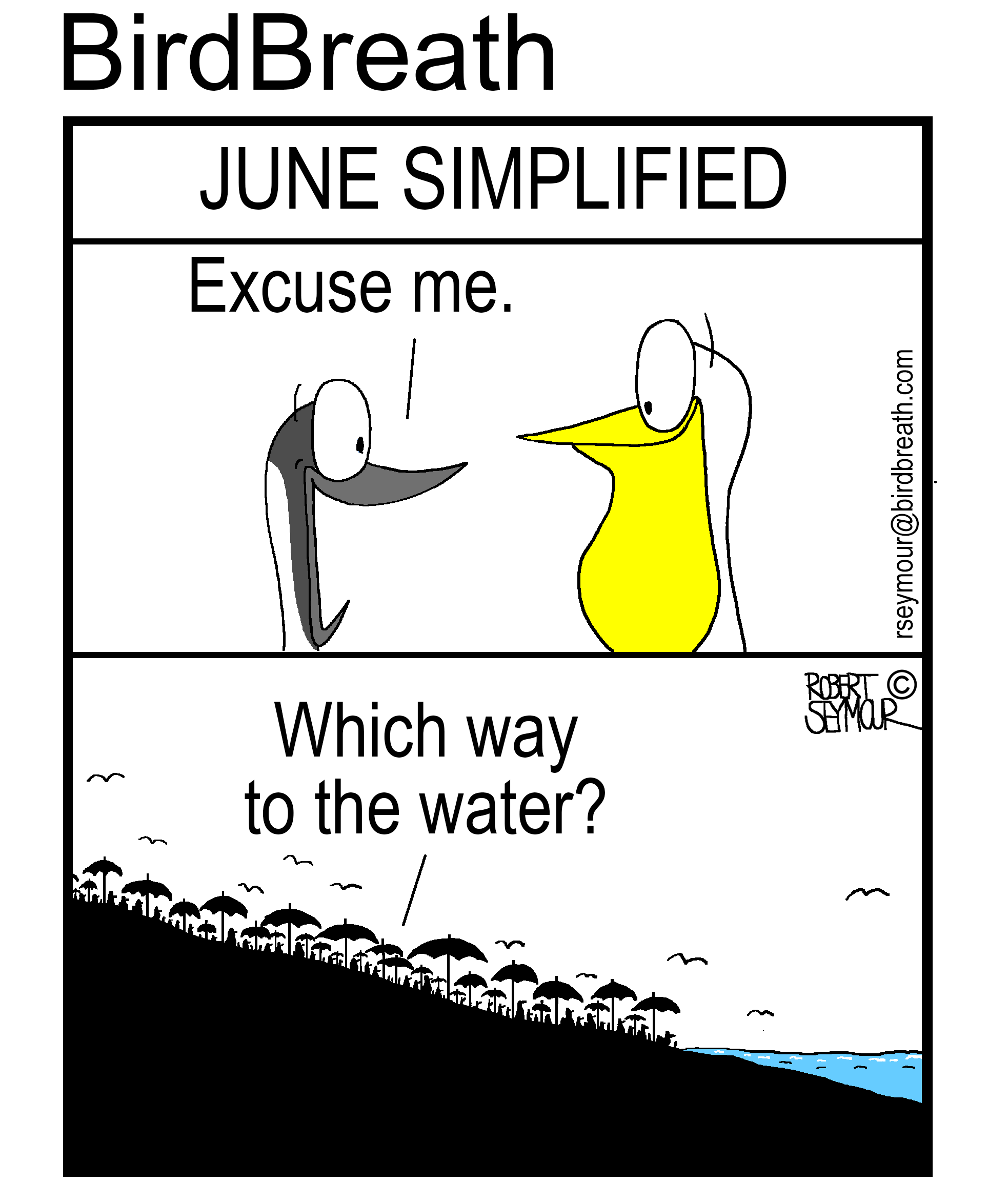
  • ON THE LIGHTER SIDE


    If you would like a printable version of this newsletter
    to take with you - -
    CLICK HERE


    "From The Bean Counter" is published to brighten your day and provide helpful information for you as a business leader.

    If you would like to learn more about My Accounting Department
    and how we can help your business achieve the success
    it is capable of achieving, contact us.

    Want To Send This Newsletter To A Friend? Click Here!
    This email was sent to jim@myaccountingdepartment.org by jim@myaccountingdepartment.org |  
    My Accounting Department | 2152 South Bristol | Holland | MI | 49424